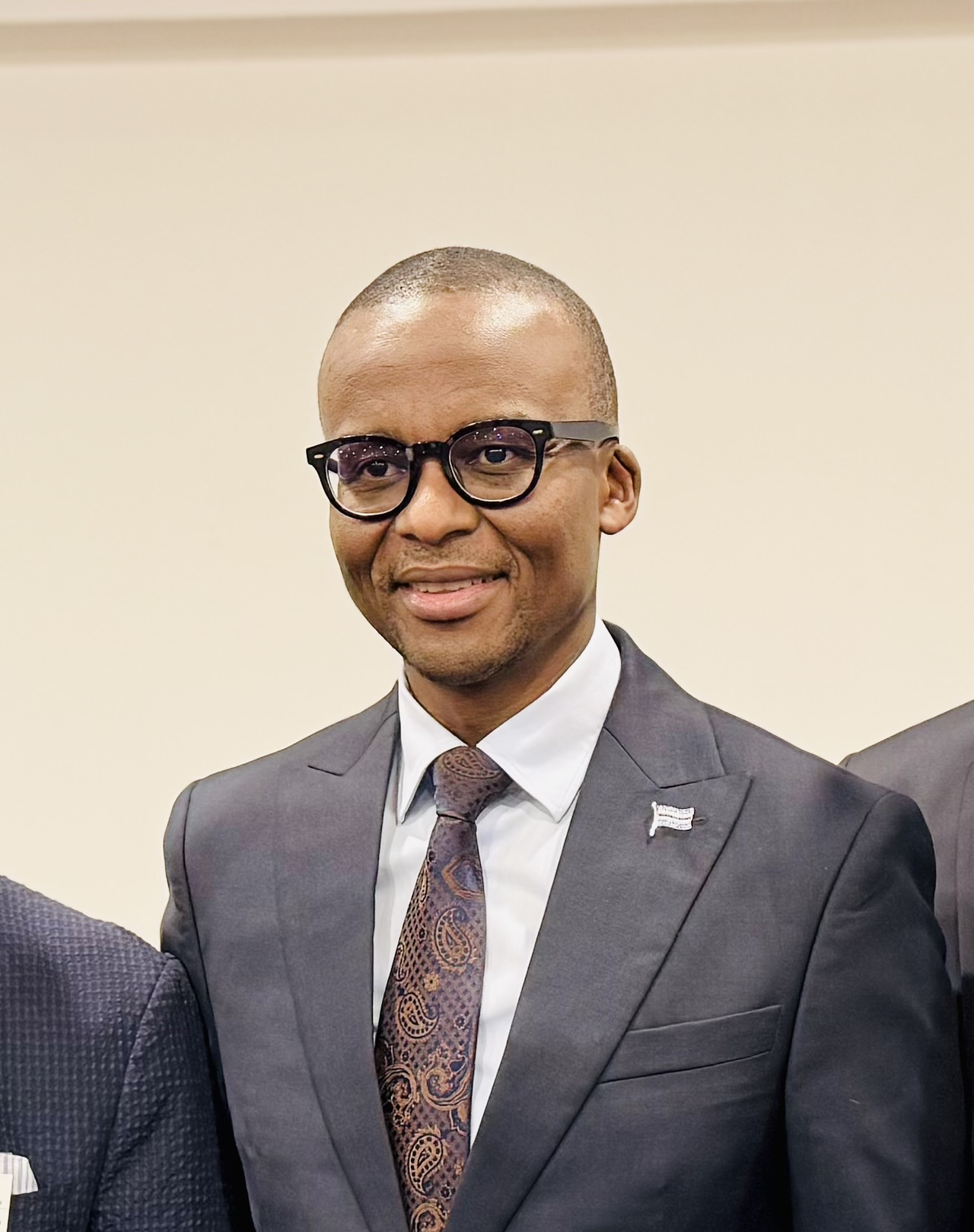
Botswana’s $37 billion investment plan targets Korean technology, capital for growth beyond diamonds
The technological capabilities of Korea and resources in Botswana could lay the foundations for sustainable and expanding opportunities for both countries, according to Botswana's Vice President and Finance Minister Ndaba Gaolathe.
“Korea has the capability. Botswana has the opportunity,” Gaolathe told The Korea Herald on the sidelines of Botswana Business Seminar held in Seoul on Tuesday.
“Korea has been such an example to the world through its innovation, industry and diligence,” he said, pointing to South Korea's transformation into an industrial and technological powerhouse as a model for Botswana's own economic ambitions.
Botswana Business Seminar was held as part of the country's drive to attract investment in manufacturing and energy to agriculture and artificial intelligence, as the country reduces reliance on the diamonds that helped build its economy.
According to Botswanan officials, the country is targeting cumulative $37 billion in investment through 2036, more than 7,000 project proposals had been reviewed, while 186 high-impact projects have been identified.
“Test us. Test our word. Test our economics. Test our market assumptions,” Gaolathe told Korean business leaders Tuesday.
“Send your engineers. Send your investment teams,” he urged.
The drive is an effort to develop new sources of growth such as strategic minerals and processing, manufacturing, renewable energy, agriculture, healthcare, artificial intelligence and financial services.
But the challenge is turning the ambition into commercially viable projects for long-term foreign investment.
For Korean companies, Botswana's proposition goes beyond access to natural resources.
The government wants foreign investors to process more resources locally, build industries and tap regional markets from the southern African country.
But Botswana's pitch also highlights challenges the country is trying to overcome.
Agriculture is one. Despite a landmass of more than 550,000 square kilometers, low productivity in subsistence farming contributes to dependence on imported food, according to Gaolathe.
“The amount of money that we spend importing food is tremendous,” he said.
At the same time, commercial farms export products including oranges to the United States and Europe, which Gaolathe cites as evidence of potential for greater agricultural production and investment.
That contrast — food import dependence alongside agricultural exports — underscores both the sector's potential and its productivity gap.
Energy presents another challenge — and opportunity.
Botswana needs about 700 megawatts of electricity, Gaolathe said, but the larger opportunity lies beyond its domestic market.
“The opportunity lies in the ability to export to Southern Africa, which has a major power deficit,” he said. That makes regional demand important to the economics of large energy projects.
Botswana is expanding its transmission network to tap regional electricity markets.
Gaborone hosts the Southern African Development Community headquarters, while Botswana is a member of the Southern African Customs Union.
‘Time as balance sheet’
Gaolathe said investors should not expect the government to make commercially weak projects viable through state backing.
“Good economics means businesses that are able to sustain themselves,” he said.
Gaolathe said he rejected requests for sovereign guarantees from some solar power developers, adding that some later proceeded without guarantees and became profitable.
“We are not there yet. But we are working very hard. A permit delayed can be a factory delayed. Time has a balance sheet,” Gaolathe said, acknowledging bureaucratic hurdles for investors.
The country also wants investment that brings expertise, not just capital.
“We are not searching for passive capital alone,” he said. "We want partners."
Whether Botswana’s $37 billion ambition draws Korean capital will ultimately hinge on project economics and execution.
“Conversation must become contact. Contact must become commitment. Commitment must become capital,” Gaolathe concluded.
sanjaykumar@heraldcorp.com